What is there to see and do near Estpona
- Estepona (12 km away), west of western Costa del Sol, is the northern part of the territory and at the border with the Ronda region, while the town centre is on the coast.
To visit: The Church of Nuestra Señora de los Remedios, the Torre del Reloj, the Calvario Hermitage, the walls of the castle, the Palacio del Marqués de Mondéjar (Palace of the Marquis de Mondéjar), the Casa de la Borrega, tours of the watch, the Ethnographic Museum, the Bullfighting Museum, the Palaeontology Museuma and the Archaeology Museum.
The surroundings:
Visit the Costa del Sol and discover the beautiful sights, excellent cuisine, and the hospitality of its inhabitants. There is also a vast cultural heritage, amazing coastlines, and a healthy biodiversity:
- Marbella (25km away) is at the heart of western Costa del Sol, between the mountainsides of the Sierra Blanca and the shoreline.
To visit: The Roman town of Río Verde, the early Christian basilica of Vega del Mar, the thermal and Roman baths of Guadalmina, the Encarnación Church, the Arab fortress, San Juan de Dios hospital, Bazán hospital, the Casa del Corregidor (house of the previous judge), the Hermitage of Santo Cristo de la Vera Cruz, the Church of Santo Cristo, the Miraflores Eco-museum, the Museum of Mechanical Arts, the Bonsaï Museum and the Museum of Contemporary Spanish Engraving.
- Manilva (30km): At the border with the Cadiz province, a preserved area of the Costa del Sol that belongs to nature.
To visit: The castle of the Duquesa or the Sabinillas fort, Santa Ana church, the Chullera towers, the Salt Towerl, and the Port de la Duquesa
- Ronda (50km), is a spectacular inland site. The town crowns a rocky tabletop with a steep precipice: The impressive Tajo gorge with its peak over 100 metres high. Ronda has the oldest and most elegant arenas in Spain.
- Malaga (80km away) and the Picasso Museum with over 200 works on exhibition, as well as being Picasso’s birthplace.
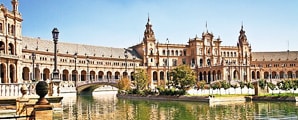
- Seville (230 km away)
Seville is located in the Guadalquivir Valley. It is the fourth largest city in Spain and is the capital of Andalusia.
To visit: The Plaza de Toros de la Maestranza, the arenas of Seville, the Torre del Oro, an attractive 13th-century tower, El Postigo, a crafts market, the Hospital de los Venerables, a hospice dating from the 17th C., with its exquisite Baroque church and the Plaza del Triunfo dominated by the statue of the Immaculate Conception.